
On November 19 the Senate passed the Bipartisan American Affordability and Jobs Act (BAAJA), 62-33, with senators of both parties voting on each side. It rewrites how the federal government approves pipelines, power lines, mines, solar and wind farms, and data centers. The Senate passed it as an amendment to H.R. 2347, so it now goes back to the House.
Call your representative and ask for a NO vote. 5 Calls looks up who represents you and gives you a script.
What the Senate Version Would Do
- Lawsuits — cut the time to challenge many permits in court from six years to 150 days, and limit who can bring certain claims.
- Courts — make it much harder for a judge to cancel a permit or stop construction over a flawed environmental review.
- Permits — bar agencies from revoking or changing most permits once they’re issued, with narrow exceptions, and let developers collect part of their project costs from taxpayers when an agency does.
- Clean water — narrow what states can consider when they certify projects under the Clean Water Act.
- Wildlife — speed up Endangered Species Act reviews.
- Historic and sacred sites — narrow which projects get historic preservation review and when preservation officers, including Tribal ones, must be consulted.
- Mining — make it easier to use federal public land for mining operations.
- Data centers — direct federal regulators to make data centers pay their share of transmission costs.
What It Could Mean for the Environment
- Water — faster approvals for pipelines and projects that cross rivers and wetlands, with less room for states to catch problems before they reach drinking water.
- Wildlife — shorter reviews near sensitive habitat mean fewer chances to spot harm to threatened species before construction starts.
- Climate — it speeds up both clean energy and fossil fuels. Faster solar, wind, and transmission lines could help; faster gas, oil, and coal projects could lock in emissions for decades.
- Tribal sovereignty — the Native American Rights Fund says it would weaken protections for sacred places and limit meaningful Tribal consultation.
One-Page Voter Information Sheet
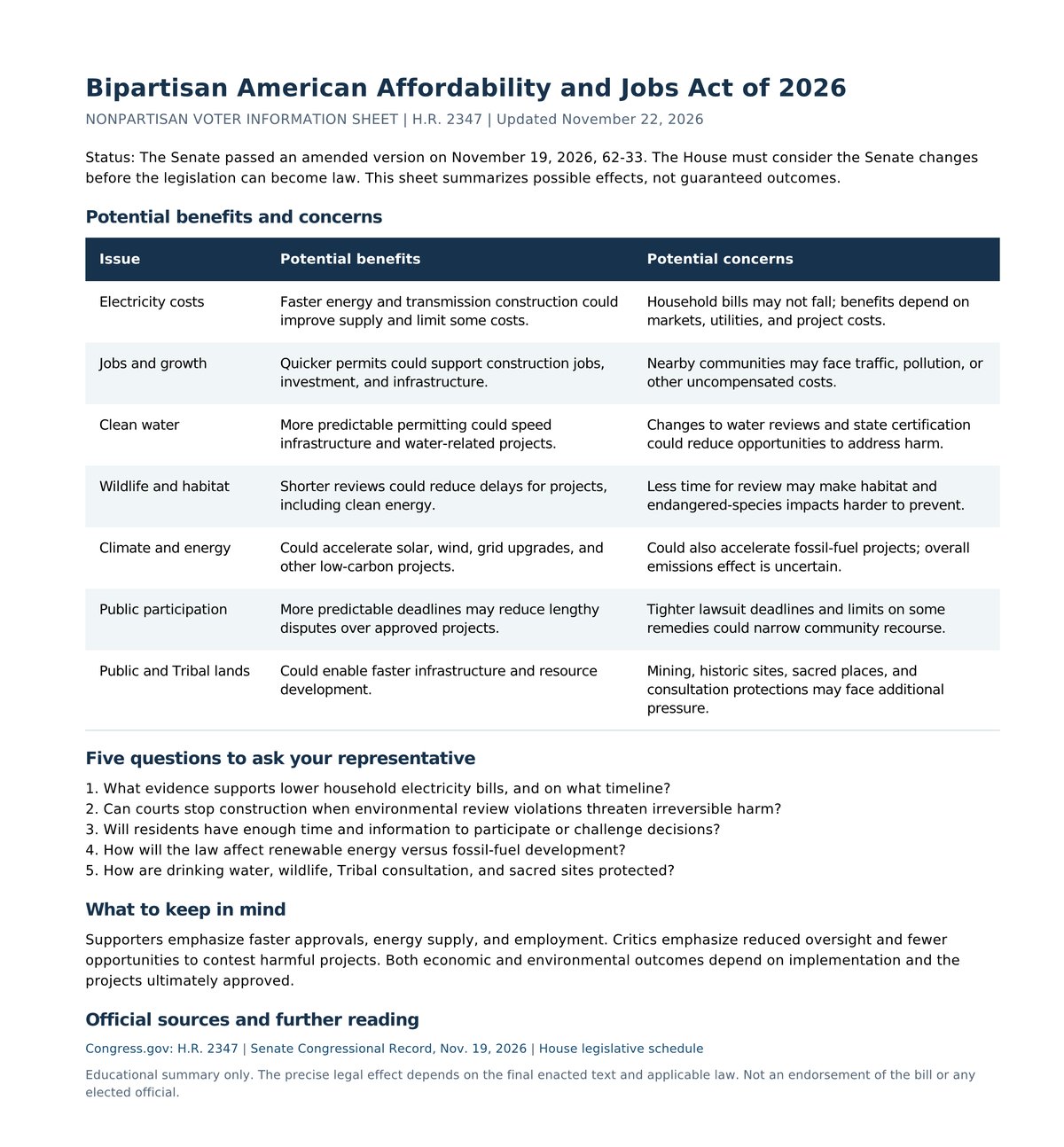
Download the sheet (PDF) to print or share.
Read more: the Senate-passed bill text and the Congressional Research Service’s section-by-section summary.