"When you see something that is not right, not fair, not just, you have to speak up. — You have to do something." — John Lewis

Author: Jade Smith

  • General Election Kickoff Call: Watch the Recording

    Indivisible National held its General Election Kickoff Call on September 2. The recording runs about 50 minutes and covers what is at stake in the midterms, the plan for flipping the House and Senate, and the most effective ways to help this fall.

    Then sign up at 2026.indivisible.org. You can knock doors, phone bank, or join the election protection program. Put in your address and the site shows you the most useful actions near you.

    Phone banking into the districts that decide Congress works from anywhere, including your kitchen table here in Ojai. Sign up for a shift.

  • Election Protection 201: What To Do When Something Goes Wrong

    About 5,100 people joined Indivisible’s Election Protection 201 training on August 26, the second half of the Hands Off Our Vote program. Where 101 was nuts and bolts, check your registration and make a plan to vote early, 201 is about what to do when something goes wrong. The recording is up:

    Action Items

    1. Download the toolkit. The Hands Off Our Vote Toolkit has the “what to do now” checklist, plus how to plan a local action and how to reach out to press. Read the now section this week, not in October.

    2. Check your registration, then help someone else check theirs. Text VOTER to 59798 and reply with your state. Californians can verify their status with the Secretary of State. There is a ready-made toolkit for passing that along by text or social media, and a second one of election protection messages.

    3. Vote early, and if you vote by mail, mail early. Every California voter gets a ballot in the mail. Get it back as soon as you can, or drop it at a drop box or vote center. Most sabotage gets saved for Election Day itself, so the more of us who have already voted, the smaller the target.

    4. Learn the 100-foot rule before you need it. In California, Elections Code 18370 bars electioneering within 100 feet of the entrance to a polling place, an elections official’s office, or an outdoor drop-off site. That is a rule about advocating for a candidate or measure, not a general ban on standing there, but know the number and check anything else with Ventura County Elections.

    5. Build your call list now. Who would you actually phone if a polling place closed with two days’ notice? Local groups already doing voter protection, faith and business leaders, a reporter, county officials. Write it down while nothing is happening.

    Rapid Response

    Molly from Indivisible made the case plainly: half a dozen people outside a local elections office with a few signs, a few hours after something happens, does more than a bigger protest after the news cycle has moved on.

    The kinds of things worth responding to:

    • Openly biased poll workers, or voter ID demanded unevenly
    • Misinformation about where, when, or how to vote
    • Aggressive voter roll purges, or polling places closed at the last minute
    • Election workers or local voter registration groups being targeted
    • Federal officials deployed at polling sites

    What to do: document it on video if you can do so safely, notify local and national press, and tag Indivisible in anything you post so it can be coordinated and amplified. Report it to 866ourvote.org or 866-OUR-VOTE, which is tracking incidents and building the record for any legal follow-up.

    One hard line from the training: violence or the threat of violence is never yours to handle. Call emergency services, get yourself safe, and document from safety.

    Two principles worth carrying around. Center the people most affected and follow their lead, and check whether someone local is already on it before planning your own response. And stay alert without assuming doomsday: tens of thousands of election workers and volunteers have spent decades making sure people can vote.

    The People Who Have Done This Before

    The guest was Cliff Albright, co-founder of Black Voters Matter, who pointed out that almost nothing in the current playbook is new. Show me your papers, seized ballot boxes, officials who win and then cannot get the keys to the office: he and his co-founders watched all of it in Alabama’s black belt and the Mississippi Delta long before it was national news. What is new is the scale, and that the federal government is now on the wrong side of it. Familiar tactics mean the ways to counter them are familiar too, and there is a role in this for everyone, not just the seven battleground states. When something is stolen in Georgia, part of whether it stands is how the rest of the country responds.

    He also named the line we have to walk in talking about it: get people appropriately afraid, but not so afraid they decide the system is rigged and there is no point fighting. “There is more of us than there is of them.”

    ICE at the Polls

    Real, but unlikely. DHS Secretary Markwayne Mullin has refused to rule it out, saying agents would be sent only if a “threat” arises, and nine state attorneys general have asked him to put a no-ICE-at-the-polls policy in writing. Sending immigration agents to polling places would violate federal and state law. The uncertainty is the point: it is meant to make Black and Latino voters think twice about showing up.

    What Indivisible is asking people to do:

    • Confirm your registration at least a month out, not the week of
    • Plug into your local immigrant rapid response network
    • Vote early, so that if something goes sideways there is still time to fix it
    • Vote with other people, and arrange an escort through Ground Control if you want one
    • Carry your ID and registration card even in a state that does not require it, because Black and brown voters are far more likely to have their eligibility challenged
    • If you are challenged or harassed, do not take the bait. The people outside a polling place do not get to decide who votes. Call 866-OUR-VOTE and document everything.

    Expect the “non-citizens voted” claim after the election. It is already being tested. In July, DHS claimed more than 250,000 non-citizens were registered to vote in four states, and named California as the largest at 190,832. States asked for the methodology and the actual list of names. DHS never provided either. Neighbors here will hear that number about California specifically. The research on disinformation is consistent: one real conversation with someone you know does more than a hundred perfect social media posts.

    The Mail Ballot Fight Is Still Moving

    This one changed three times in the week of the training, which is the most useful thing to know about it.

    The Supreme Court lifted one injunction against Trump’s mail-voting executive order on Monday, August 24. Coverage made it sound like the Court had blessed the order. It had not: the ruling was procedural, about the timing of the lawsuit, and the Court said explicitly it was not addressing the plan’s legality. Justice Ketanji Brown Jackson wrote in dissent that the decision “needlessly injects chaos and uncertainty into the upcoming midterm elections.”

    Then on August 26 a federal judge lifted the last nationwide block, and two days later she froze the Postal Service from implementing the rules while she weighs a permanent ban. Votebeat is tracking the status, and it has probably moved again by the time you read this.

    Preparation, not panic. Do not overindex on any one day of it. Nothing has changed for you as a voter: if you are eligible to vote by mail, you still can. Mail it early or drop it off.

    Ballot Curing

    Every election, thousands of ballots get rejected over small mistakes, such as a signature in the wrong box on the envelope. Many states, California included, have a legal process for contacting those voters in time to fix it. That is called curing, and it runs on volunteers making phone calls in the days after an election. It is one of the highest-value things you can do, and the opportunities show up late. Watch for them.

    If They Refuse to Concede

    Indivisible is saying out loud that if the administration refuses to hand over power, the response is sustained mass mobilization: an ongoing in-person presence at a significant location until every vote is counted and the winners are seated. Not a two-hour march on a Saturday. Not something that ends on November 3.

    That would be a rapid response, not a pre-planned event, so the ask right now is simply to be reachable. The commitment to nonviolence is firm, and the training made the case that it is strategic and not only moral: nonviolent movements are how this has actually been beaten elsewhere.

    Resources From Both Trainings

  • CalMatters Voter Guide

    The June primary may feel like it just happened, but the November 3 general election is close. CalMatters has begun publishing its guide to the November ballot, and it is the clearest free, nonpartisan explainer we know of for a California ballot this long.

    CalMatters 2026 Voter Guide →

    The Candidates

    The guide covers the candidates for the state Assembly, the state Senate, the U.S. House, insurance commissioner, and the other statewide offices, including the race to replace term-limited Gov. Gavin Newsom.

    Readers asked for this during the primary, so CalMatters added a page on the state Supreme Court retention election, with details on the associate justices on the ballot. They have also updated the guide’s FAQ based on reader feedback.

    The Propositions

    There are 14 statewide measures on the November ballot (the Secretary of State’s official list is the authority on what qualified). CalMatters has published guides and quizzes on three so far:

    • Prop. 40 — a one-time 5% tax on Californians whose net worth exceeded $1 billion as of January 1, 2026. Most of the revenue would go to health care, with the remainder to education, food assistance, and administration.
    • Prop. 41 — prohibits new state taxes that exclude revenue from the state spending limit, and requires the State Auditor to audit programs funded by new or increased special taxes.
    • Prop. 42 — prohibits new state personal property taxes and certain retroactive state taxes.

    One thing worth knowing before you get to that part of the ballot: these three interact. The Legislative Analyst’s Office notes that if Prop. 41 or Prop. 42 receives more “yes” votes than Prop. 40, Prop. 40 could be stopped from taking effect even if a majority of voters approve it, because the courts could find them in conflict. Read all three together rather than one at a time.

    CalMatters will publish guides on the remaining propositions over the coming weeks.

    Separately, we have written about Prop. 39, the voter ID measure, which is the one on this ballot that goes directly to whether eligible people can vote.

    Dates that matter

    • Oct. 5 — mail ballots go out to every registered voter in California
    • Oct. 6 — ballot drop-off locations open
    • Oct. 19 — last day to register to vote the ordinary way
    • Oct. 31 — in-person early voting locations open statewide
    • Nov. 3 — Election Day; polls close at 8 p.m.

    Two Ventura County notes on top of that:

    Missing the October 19 deadline is not the end. California has same-day conditional voter registration. After the 15-day deadline you can still register and vote a provisional ballot in person, at a vote center or the county elections office, right through Election Day. It counts once the county verifies your eligibility.

    Ventura County is a Voter’s Choice Act county. That means every registered voter is mailed a ballot, and instead of a single assigned neighborhood polling place there are vote centers open for several days before the election, any of which any county voter can use. A smaller set opens first, with the rest opening in the final days. The county publishes the locations and hours for each election at the Ventura County Clerk-Recorder elections page. Check there for the November list rather than assuming last cycle’s site is open again.

    And once you have voted, sign up for BallotTrax: it tells you when your ballot was mailed, received, and counted, so you know your vote landed.

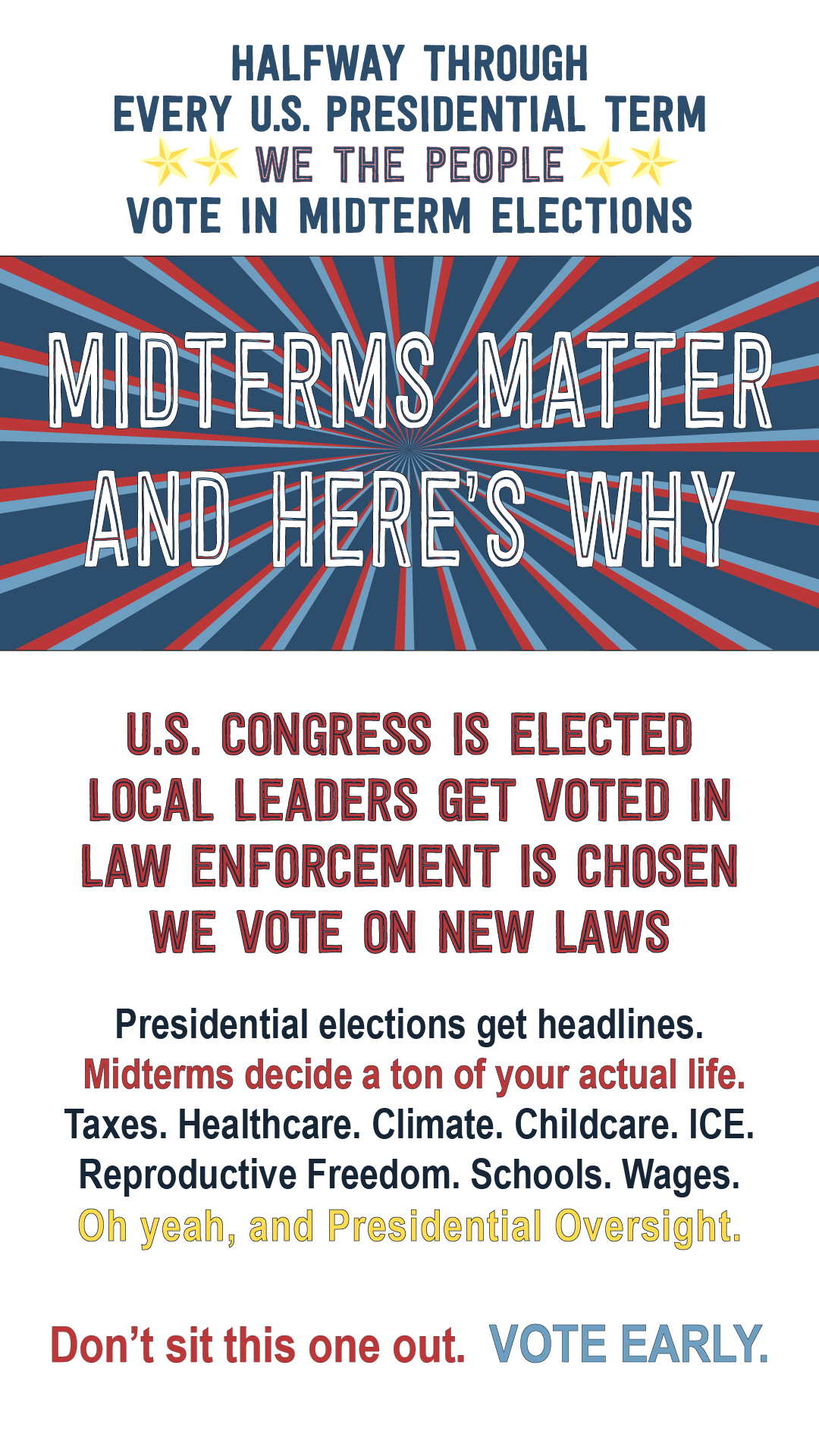
    Vote early. A ballot already in the box cannot be affected by anything that happens in the last week.

  • How to Understand Your Rights as This Regime Flails

    Trump is doing what all fascist losers do in the lead-up to a catastrophic electoral wipeout: he’s preparing to sabotage the election. And repression of civil society and activists is a key part of the playbook. In this episode, Leah and Ezra run through four real-world scenarios pro-democracy organizers may face in the coming months and explain what your rights are and how to exercise them. Then it’s lots of live Q&A on election sabotage, scam PACs, Democratic messaging for the general election, and more!

    — Ezra Levin, August 21, 2026

    Watch the latest videos here on our What’s the Plan? page

  • Election Protection 101: Watch the Training

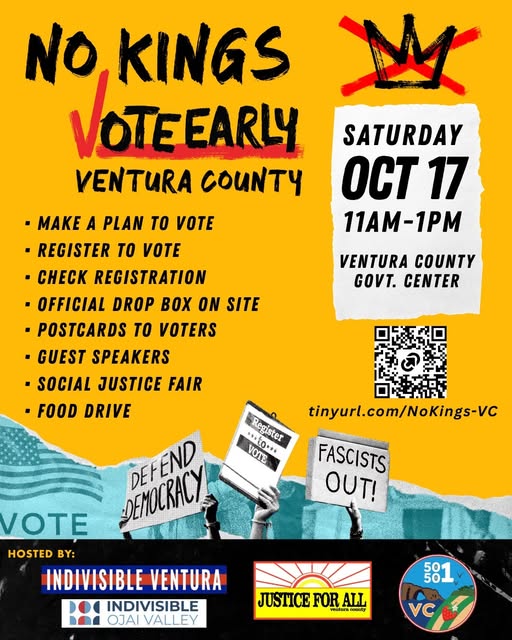
    More than 4,000 people joined Indivisible’s Election Protection 101 training on August 19 as part of the Hands Off Our Vote program, the national effort to make sure every eligible voter can cast a ballot and every ballot gets counted. The full recording is up:

    Action Items

    1. Check your registration. Then check it again. Voter roll purges are the tactic being used right now to block eligible voters, and a purge can happen late. Californians can verify their status or register and update an address with the Secretary of State. Indivisible also built a text tool: text VOTER to 59798, reply with your state, and you get the official link for wherever you live. Put a reminder in your calendar to check again in a month. Flex it: a table with a few printed signs at the farmers market or a community event is all a “check your registration” action needs.

    2. Make an early-vote plan and put the date in your calendar. Voting early protects your vote against everything from a sabotage attempt to getting the flu on November 2. Look up your state’s dates at 866ourvote.org, then pick the earliest day you can actually commit to. Flex it: vote together. A group trip to a vote center, or an afternoon where everyone fills out and drops off their ballots and then goes to lunch, does more for turnout than any post.

    3. Volunteer locally. Every county has its own needs, and the organizations already doing the work know them best. Indivisible points to Ground Control as the clearinghouse for vetted local opportunities: rides to the polls, bilingual helplines, poll worker sign-ups, filtered to where you live and updated often. Locally that means the Ventura County Elections Division, which recruits and trains poll workers for every election. You’ll want to know the difference between:

    • A poll worker is an official, nonpartisan election staffer employed by the county.
    • A poll monitor, watcher, or observer is stationed by a party, campaign, or organization to watch for irregularities. The rules for the second category vary a great deal by state.

    4. Talk to the people who run our elections. The more our county and state officials know that people are paying attention, the less room there is for quiet changes to voting.

    And when local election workers do the job well (clear information, easy access) say so publicly. It is a hard job, and they are the people who make an election run. Thank you Michelle Ascencion!

    On how we talk about this

    Messaging researcher Anat Shenker-Osorio presented findings from Indivisible’s research and made two points worth carrying around.

    The first is a correction. The claim that “they’ll just cancel the election” is both wrong and counterproductive: it does the work of anyone who wants people to stay home. There will be an election. Be vigilant for a government that keeps the forms of democracy while reshaping the rules underneath them.

    The second is about what actually moves people. Naming a policy is not enough: most people do not translate a policy into its effect on their own ability to vote. Say the effect plainly: they are trying to keep people from voting, so they can control the outcome of elections and hold on to power. And do not soften the ending. In her research, hearing about attacks on voting made a solid majority more determined to vote, not less. People turn out against this kind of thing out of defiance.

    Next: Election Protection 201, Wednesday, August 26

    The follow-up training covers the higher-stakes period of the weeks right before, during, and after the election. Sign up here.